Tor to Shore - Autumn Update 2026

Tor to Shore - Autumn Update 2026

Catch up on a busy season of habitat restoration, marine monitoring and opportunities for young people through our ambitious Tor to Shore project.

It’s been a busy few months for the Tor to Shore project, one of Cornwall Wildlife Trust’s most ambitious projects ever, which aims to create a thriving and connected landscape for both people and wildlife, from the heights of Helman Tor through to the marine habitats in St Austell Bay. 

Continued grazing around the Helman Tor nature reserve complex by English Longhorn cattle is helping to reinstate natural processes, mimicking the grazing, trampling, browsing and dunging of the now extinct aurochs (Europe’s original wild cattle). This helps to create a mosaic of vegetation heights, inhibits unruly plants from dominating and allowing growth of different, less-dominant plants which support a range of animal species. Fencing upgrades at nearby Creney Farm have improved welfare by preventing English Longhorn calves accidentally separating from their mothers. 

Scrub clearance has also begun by our team and volunteers and will continue throughout the winter. The Helman Tor volunteer work party have been cutting and burning monoculture species such as willow and gorse, which, much like cattle grazing, allows other plants to grow in cleared spaces.  The work party have also been creating curved indents along the woodland edge, which provides sheltered microclimates to benefit a range of wildlife. 

A controlled fire burning a pile of gorse after being cleared, with Helman Tor in the distance

Across the Helman Tor Nature Reserves, species and habitat monitoring has continued, including surveys for dragonflies and damselflies. This monitoring has recorded the nationally scarce Small Red Damselfly within one of the beaver wetland areas for the second year running, which demonstrates the value of rewilding and wetland creation. 

A series of drone surveys have been completed at several key project sites, including Higher Trevilmick Nature Reserve, North and South Redmoor Nature Reserves, and on third party land within the Par catchment. This mapping records habitat status and enables the project to track changes over the coming years, as rewilding is expanded across the nature reserves and new habitats and sustainable management is implemented on private land across the catchment. 

A small red damselfly perched on a green stem

Laura Snell

In August, we welcomed a new Beaver Project Officer to the team, who has continued monitoring beaver activity across the release sites. Camera traps have confirmed the bonding of pairs that were unfamiliar with each other prior to release, while site visits have confirmed that additional dams have been built. In the summer, despite drought conditions, the beaver wetlands thrived, demonstrating the important role beavers can play in retaining water during droughts and increasing climate resilience. 

Our Farm Advisor has also been busy engaging with local farmers and landowners within the catchment, including supporting with the project's first Sustainable Farming Incentive (SFI) application with one landowner, to aid in generating more than £30,000 over three years for low-input grasslands and traditional late-hay cuts in selected fields, allowing wildflower habitats to thrive.  

Additionally, our Farm Advisor has secured two tree planting projects for landowners for this winter, through Forest for Cornwall, allowing them to establish traditional orchards, coppice areas, and native hedgerow restoration.  

Tor to Shore is not just about what happens on land. Water quality testing is continuing, highlighting trends in nitrate and phosphate levels of freshwater flowing into St Austell Bay. This monitoring is expanding with help from West Country Rivers Trust volunteers, helping to build a bigger, more in-depth picture of water quality across the Par river catchment.  

Partnership with One Atlantek over the summer enabled Baited Remote Underwater Video System (BRUVs) and Hydromoth acoustic monitoring for carnivorous marine species as well as overall biodiversity through recording both videos and soundscapes within the seagrass and maerl beds. Data is collected in collaboration with Bristol University and results are being analysed by a Master's student.  

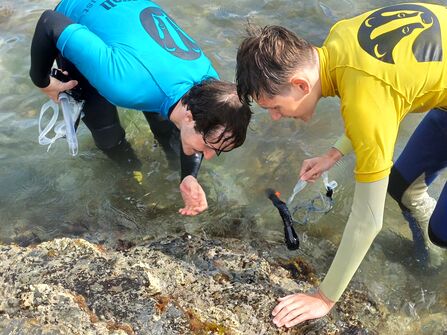
The community have been getting involved too. Eight new local snorkel volunteers were trained in seagrass and kelp monitoring, and the St Austell Bay Charter of the Sea is being promoted with local businesses and industries, with the next stages in development for next year.  

The summer review of the Cornwall Good Seafood Guide, using a new, updated methodology from the Marine Conservation Society, has been completed and is live on the Cornwall Good Seafood Guide website. The review has highlighted some positive trends in some fisheries, line-caught bass receives the best possible rating of 1 (making it the only wild fishery to achieve this). Line caught Atlantic Bluefin Tuna has also improved to a 2. Both of these species are very important to the St Austell Bay area, and have bounced back from periods of heavy overfishing thanks to proactive management showing how fisheries and nature can both thrive together. 

A fisherman holding a line-caught bass with its South West Handline Fishermen's Association tag showing when the fish was caught and who by

Matt Slater

Cornwall Good Seafood Guide

Want to make sustainable choices when it comes to seafood? Cornwall Good Seafood Guide is here to help us all make good seafood choices, providing detailed information on all the seafood landed to Cornish ports by Cornish boats, and all rated on sustainability. 

Choose Sustainable Cornish Seafood

Our Community and Engagement team have continued to connect people with nature.  

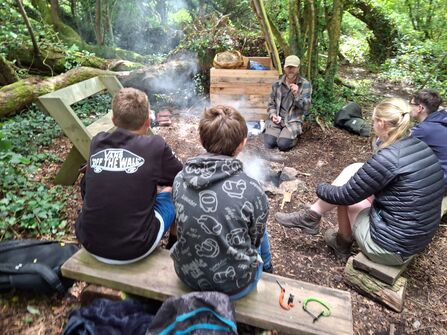
The second six-week Nature Connection Course, delivered with Young People Cornwall, supported young people to engage with nature and improve their wellbeing, with participants reflecting how they felt calmer when they were out in nature and had desires to spend more time outdoors. And students at a specialist provision school have been taking part in youth volunteer days, working towards their Duke of Edinburgh Award and gaining practical conservation skills. 

A new youth pathway has also been set up following on from our successful Wilder Summer event, where young people were able to take part in a range of wildlife experiences: from ranger activities and wildlife surveys, to bushcraft and photography. Now young people aged 13-17 can join our Youth Network, which meets monthly for a range of volunteering and social activities.

Find out more and apply

Overall, our expanding youth opportunities are building confidence, improving wellbeing, developing practical conservation skills and inspiring lasting connections with nature.  

The summer also saw a varied programme of public events and activities engaging over 550 people of different ages and backgrounds, raising awareness of local wildlife, participation in nature-based activities and strengthening community connections. These included wildlife stalls at Charlestown Harbour, guided walks, BioBlitzes and our Big Beach Day at Carlyon Bay, an incredible day featuring beach cleans, wildlife activities, crafts and storytelling as well as the release of several hundred baby lobsters with the National Lobster Hatchery. 

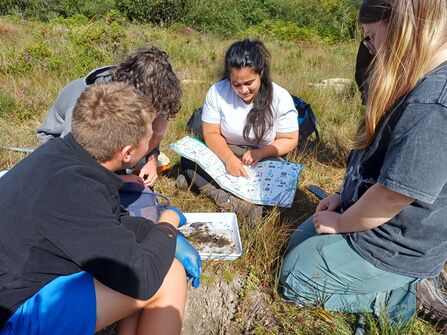
A group of people exploring grass and heathland at Breney Common looking for and recording species

New volunteering opportunities have also been created: 11 new Community Engagement volunteers have been recruited, and the citizen science volunteering programme is also developing, from informal monthly Spotting and Strolling events to supported survey volunteering opportunities (coming soon!). If you’d like to get involved, check out Tor to Shore events for future opportunities, add wildlife sightings to ORKS, join and participate in our Wildlife Recorders Facebook Group, or email our Community & Engagement Officer at sasha.pinto@cornwallwildlifetrust.org.uk for information on volunteering opportunities. Our network of Associated Groups are also offering varied volunteering opportunities and are a fantastic way to support wildlife in your local area. 

Join an Associated Group

We are also hoping to provide more ways for the community to access nature in the future. Contractors, RG Kellows Ltd., started work at Creney Farm in July and have made swift progress in the renovation of the site to create a welcoming community hub for even more people to connect with nature and explore the Helman Tor Nature Reserves. We aim to have this ready for visitors in 2027 – watch this space!  

An old brick barn, surrounded by scaffolding, with timber roof frames and lots of builders and developers in high-vis and hardhats on the ground and scaffolding
The National Lottery Heritage Fund logo


Tor to Shore is made possible with The National Lottery Heritage Fund. Thanks to National Lottery players, we are working with local communities across land and sea to restore habitats, support species recovery, and create a resilient, connected landscape where both people and nature can thrive. 

Wild about Cornwall - Hibernating dormouse

Danny Green

Want to keep up to date with all things Tor to Shore?

Join the Facebook group or Instagram Broadcast Channel for event announcements and project updates 

Facebook Group Instagram Broadcast Channel