
Each spring marks the start of another season of public trips to Looe Island nature reserve, with the first trips around Easter. Whatever the weather, the island always looks so beautiful at this time of year, however, the exceptionally wet winter and powerful storms have hindered the pre-opening jobs, so in the calm, dry spells it has been full steam ahead!
Looe Island: Spring Update

Looking out to sea at Looe Island. Image by Claire Lewis.
A spring update from Looe Island Warden, Claire, and the kind of wildlife you can expect to see on a visit to the island.

Primroses. Image by Claire Lewis.
Once greeted off the Looe Sea Safari boat, our first visitors can follow the self-guided trail and enjoy uplifting signs of spring. There are carpets of lush, green wild garlic leaves (ramsons) and clumps of the pale, yellow flowers of primrose, otherwise know as the 'first rose' of the year. Other early wildlife sightings include the unmistakable fluttering of the red admiral butterfly. With its black velvety wings and red stripes, it’s often the first butterfly spotted each year.
As to seabirds, it's usually cormorants (black birds with long necks) who win the race to be first to build nests, lay eggs, and raise chicks. Each year they normally start showing signs of breeding in December, with several obvious nests in January. However, the storms usually hinder progress and it’s in March when we see plenty of cormorants displaying and sitting on nests, often with up to four eggs.
Over the winter, the island supports a huge winter gull roost. Maybe you’ve spotted gulls at dusk flying down the Looe valley and out across the sea? If so, you’ll be watching a great spectacle, as several thousand gulls (mainly herring and great black-backed gulls) take overnight shelter here. And remember, those great black-backed gulls are the world’s largest gull and the island has Cornwall’s largest breeding colony of this species! And the herring gulls? Well, while they are the quintessential sound of the seaside, they are, in fact, in serious decline. Still, the island supports a large breeding colony of both these birds, so an early spring visit means you’ll get to witness the antics of courtship and nest building.

Cormorant on nest. Image by Claire Lewis.

Shag and cormorant in breeding plumage. Image by Claire Lewis.
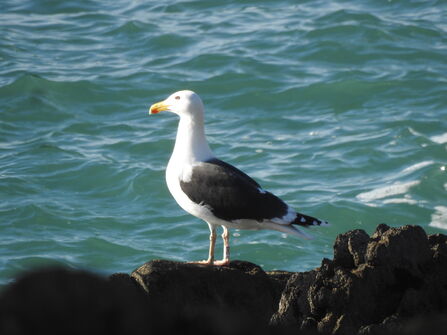
Great black-backed gull. Image by Claire Lewis.
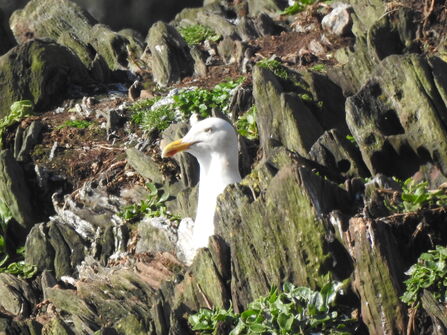
Herring gull at cliff nesting site. Image by Claire Lewis.
Finally, a delight of any trip is the chance to see Cornwall’s iconic grey seals. Our visitors typically encounter seals as they rest in the sea. When we tell people that the seal is probably asleep, this always surprises them, especially if the seal ‘sinks’ underwater and we say that if it remains undisturbed it will continue to sleep! Seals can sleep on land too – indeed, they need plenty of undisturbed rest as it’s a time to digest food and replenish their energy levels, especially if they are going through their moult or are pregnant and need to lay down fat reserves.

Grey seal 'bottling' in the sea. Image by Claire Lewis
Claire Lewis, Looe Island Warden for Cornwall Wildlife Trust

Looe Island, Image by David Chapman