

Paul Lightfoot
Looe Island Nature Reserve
Looe Island nature reserve is a special place where wildlife thrives. Surrounded by the rich waters of Looe Bay, the island provides an important sanctuary for marine life, seabirds and coastal species, with a remarkable variety of habitats packed into a small area.
Part of the Whitsand and Looe Bay Marine Conservation Zone (MCZ), Looe Island is home to precious woodland, maritime grassland, sand, shingle and rocky reef habitats, all carefully managed and protected for the benefit of nature.

Kingfisher on Looe Island by Derek Spooner
Amazing wildlife to discover
Read moreTo help protect the island's sensitive habitats and wildlife, visits are only possible as part of official organised trips. Landing or accessing the island by any other means, including on foot, is not permitted. We also ask boat users, kayakers, paddleboarders, swimmers, snorkellers and divers to help us care for this special place by respecting the no-landing signs around the island and foreshore.
To minimise disturbance to wildlife and ensure everyone can enjoy the island's peaceful atmosphere, dogs are not permitted on the reserve and fishing is not allowed during visits.
One of the things many visitors value most about Looe Island is its sense of tranquillity. To help preserve this unique experience for both wildlife and people, camera drones are not permitted. You can find out more about our drone policy here.
For practical information about visiting, including accessibility, facilities and reserve information, please visit the Looe Island nature reserve page.

Lucille the seal sleeping at the waters surface by Claire Lewis
Island Wildlife
The nature reserve is home to many nesting birds such as cormorants, shags and oystercatchers. Looe Island has the largest breeding colony in Cornwall of the majestic great black-backed gull. This species uses its size to its advantage. It is kleptoparasitic, meaning it will rob other sea birds of their catch as a means of obtaining food. Nests, which are built by both partners, are made of twigs, grass, seaweeds and other vegetable matter and lined with feathers. However eggs are still vulnerable to predation from carrion crows and rats. In 2010 a great black-backed gull ringing project was started on the island. So far almost 700 birds have been ringed and sightings of the young birds have been reported from as far afield as north-west Spain!
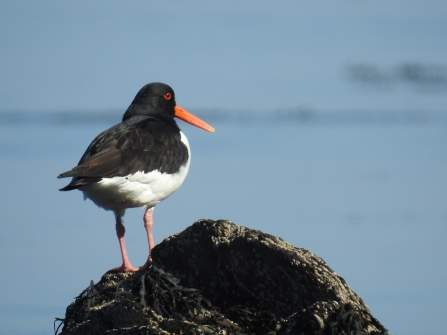
Oystercatcher from by Claire Lewis
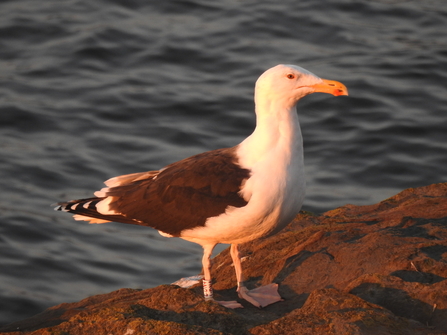
Great black-backed gull by Claire Lewis

Cormorant on nest. Image by Claire Lewis.
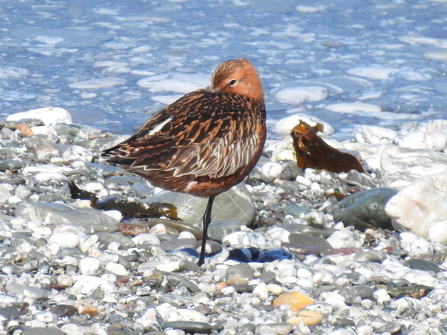
The island is also home to grey seals. Their Latin name, Halichoerus grypus means 'hooked-nosed sea-pig'! With adult males of about 3m long and weighing around 300 kg they are Britain's largest mammal. The seals are often seen from the island and with the help of Cornwall Seal Group and volunteers (co-ordinated by Looe Marine Conservation Group) we are conducting seal surveys using photo identification to learn more about these fascinating animals.
Across the island small wildflower meadows are being created. These areas, combined with the mix of grassland, scrub and woods have allowed numerous moths and butterflies to flourish. Most frequently spotted are speckled wood, meadow brown and red admiral although it is also possible to see beautiful silver-washed fritillaries or the day flying hummingbird hawkmoth feeding on plants such as red valerian.
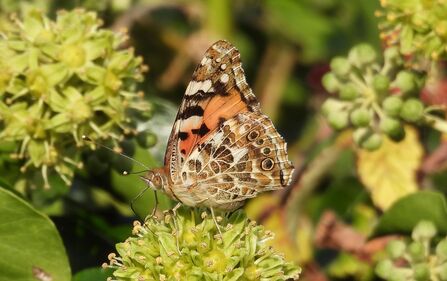
Painted lady by Claire Lewis
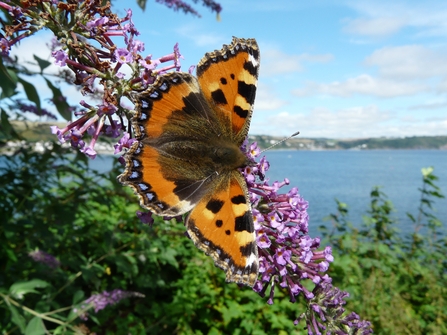
Small tortoiseshell butterfly on Looe Island. Image by Cornwall Wildlife Trust's Claire Lewis
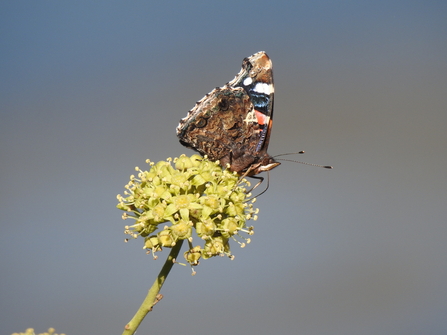
Red admiral on flowering ivy by Claire Lewis
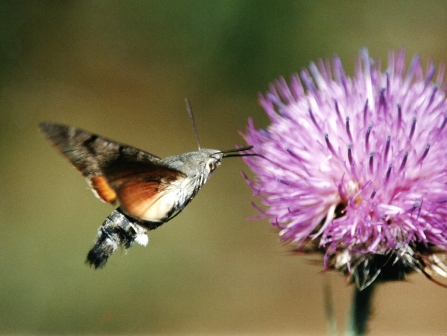
Hummingbird hawkmoth by David Appleton
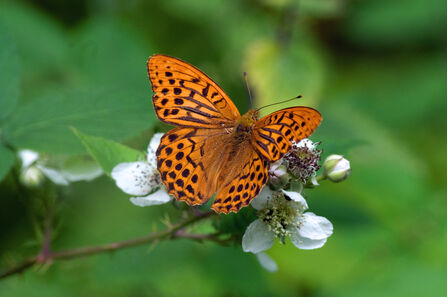
Silver-washed fritillary ©Don Sutherland
In 2004 a stock fence was erected, splitting the island in half. After a period of trial grazing to ensure the suitability of sheep to the island, a small flock of Hebrideans were shipped over in August 2006. Following on from their success we now have a non breeding flock of Shetland sheep. The Shetlands' capacity to utilise a wide variety of forage of poor nutritional quality, coupled with their hardiness and strength makes them the ideal conservation tool.

Looe Island Nature Highlights
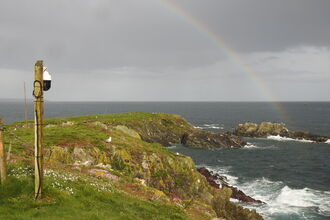
Spring update from Looe Island, and some new faces on the island
An update from Looe Island Warden, Claire: volunteers, webcam updates, events, and of course, wildlife!
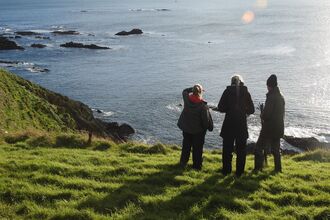
Looe Island: Spring Update
A spring update from Looe Island Warden, Claire, and the kind of wildlife you can expect to see on a visit to the island.
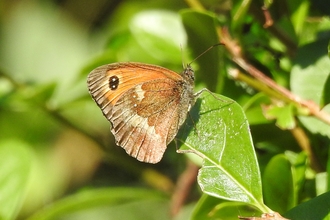
Looe Island Summer Update: A Butterfly Bonanza Year
Looe Island Assistant Warden Claire provides a summer update from Looe Island which is experiencing a butterfly boom this summer,…


No drone zone
Why we don't allow drones
For the safety and enjoyment of other visitors, and to protect wildlife from disturbance, please do not fly unmanned aerial vehicles (drones) or other remote-control flying devices on Looe Island Nature Reserve without permission.
The use of drones is overseen by the Civil Aviation Authority and is an area where regulation is currently developing. Drones require permission and licensing to operate, and operators must have sufficient training and insurance to use them safely and responsibly.
Our reserves are important areas for wildlife and many of them are used for breeding. These sites are sensitive to disturbance; for instance, birds may feel threatened by drones and abandon their nests.
We do obtain drone footage of our reserves to assist our conservation work, but it is done by our own licensed operator, or with our permission if we are confident the operator is licensed and insured and that wildlife will not be injured or disturbed. If you have any questions about drones on Looe Island, please contact looeisland@cornwallwildlifetrust.org.uk.